जल कवच Jal Kavach, a shield for water

Safe drinking water for every home that doesn’t have it yet.

Jal Kavach is a filter the size of your palm. It clamps onto an ordinary tap, or screws onto a bottle, and in independent lab tests it removed 99.9999% of E. coli. It needs no electricity, wastes no water and costs about 10 paise a litre. Foundations, CSR teams and the armed forces use it to reach homes that RO purifiers were never built for.

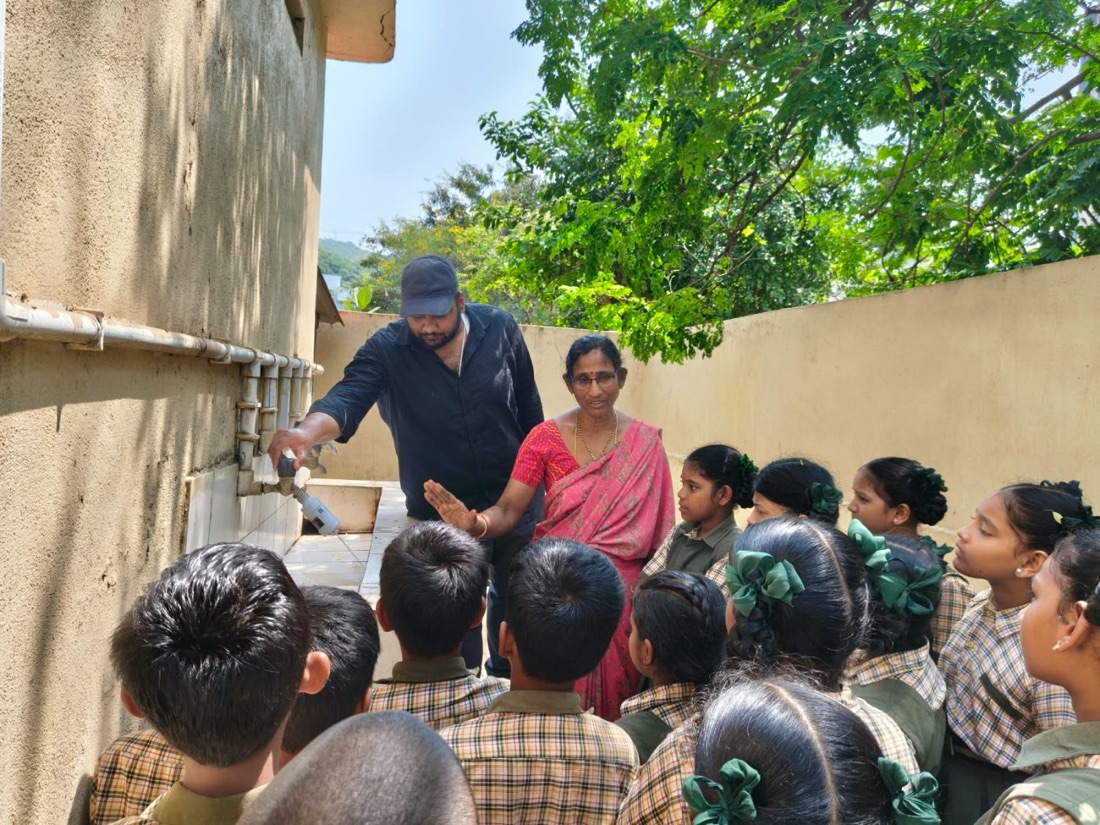
A DetoXyFi team member shows schoolchildren and their teacher how Jal Kavach works on the school tap
Visakhapatnam district Showing students how the filter works at their school tap. October 2026.
families reached
100,000+
filters delivered through foundation partners
11,565
states and union territories
11
per litre of safe water
~10 paise

Figures from distribution records, as of November 2026. Many filters sit on a tap that several families share, at a school, a health centre or a village stand-post, so one filter often serves more than one family.

Millions of families still boil, strain or simply hope.

In Chapar, in Assam’s Dhubri district, families fill their pots from river channels the colour of tea. In the villages around Kotma in Madhya Pradesh, women pour every pot of drinking water through a cloth, then wash the cloth. Every day.

Across rural and low-income urban India, water comes from a hand pump, a tanker, a shared tap or a river. Families boil it when they can afford the fuel, or drink it as it is. Waterborne illness costs them school days, wages and, too often, a child.

An RO purifier costs many thousands of rupees, needs a plug point and pours most of the water down the drain. It was never built for these homes. Jal Kavach was.

A DetoXyFi team member holds up a Jal Kavach filter in front of a class of schoolchildren
Visakhapatnam district A lesson on safe water, part of a corporate foundation’s school programme. Photograph: DetoXyFi field team.
Before: a bottle of untreated water held up, with silt settled at the bottom After: a small glass of clear water held up after Jal Kavach, with the silty bottle out of focus behind it and women seated in the background
Dhubri district, Assam Left, silt settled out of untreated water. Right, a glass after Jal Kavach, with that bottle behind it. Taken during a village meeting, October 2026.

A germ shield the size of your palm

Inside every Jal Kavach is a membrane with pores just 0.1 micron wide, about a thousand times thinner than a human hair. Water passes through. Bacteria and protozoa don’t.

Removes
99.9999% of E. coli in independent lab tests. The 0.1-micron membrane is built to stop other disease-causing bacteria and protozoa too, and it clears visible cloudiness and colour.
Keeps
The natural minerals in the water. Unlike RO, it doesn’t strip out calcium and magnesium.
Needs
Nothing. No electricity, no plumber, no chemicals. It works on tap pressure, or by pouring from a bottle.
Doesn’t
Remove dissolved salts, or heavy metals such as arsenic and lead. Where those are a problem, we’ll say so plainly and help you pair it with the right treatment.

Tested at the Shriram Institute for Industrial Research (NABL-accredited), June 2025: E. coli cut from 2.1 million to under 1 per ml (99.9999%), turbidity from 4.8 to 0.2 NTU, and TDS unchanged. See the full results and what they mean, or read the original report (PDF, 0.6 MB, report no. C1/0000396239). Born from research at MIT.

How it compares

FeatureJal KavachRO purifierBoilingCloth straining
Removes bacteriaYes, 99.9999% of E. coli in lab testsYesYesNo
Removes salts, arsenicNoYesNoNo
Needs electricity or fuelNoElectricityFuel, every dayNo
Water wastedNoneMost of itNoneNone
Keeps natural mineralsYesNoYesYes
Upfront costUnder ₹1,000Many thousands of rupeesA pot and a stoveA cloth

Not sure what your water needs? Read our plain guide to RO, UV, UF and tap filters.

Where Jal Kavach went this year

Most of our filters reach families through foundations and CSR programmes. These are a few of the places, and what we learned on the way.

See every place on the map

Where Jal Kavach has reached Map of India marking community programmes in Andhra Pradesh, Assam, Bihar, Jharkhand, Madhya Pradesh, Maharashtra, Odisha, Puducherry, Punjab and Chandigarh, Uttar Pradesh and West Bengal, and work with the forces in Rajasthan and Arunachal Pradesh. Visakhapatnam Visakhapatnam Dhubri Dhubri Guwahati Kotma Kotma Karaikal Karaikal Mirzapur Pirpainti Dhamra Gopalpur Banka Jehanabad Nagpur Bhubaneswar Chandigarh Durgapur Chapra Ranchi Varanasi Kanpur Patna Bihar Jaisalmer Jaisalmer Itanagar
Community programmes With the armed forces
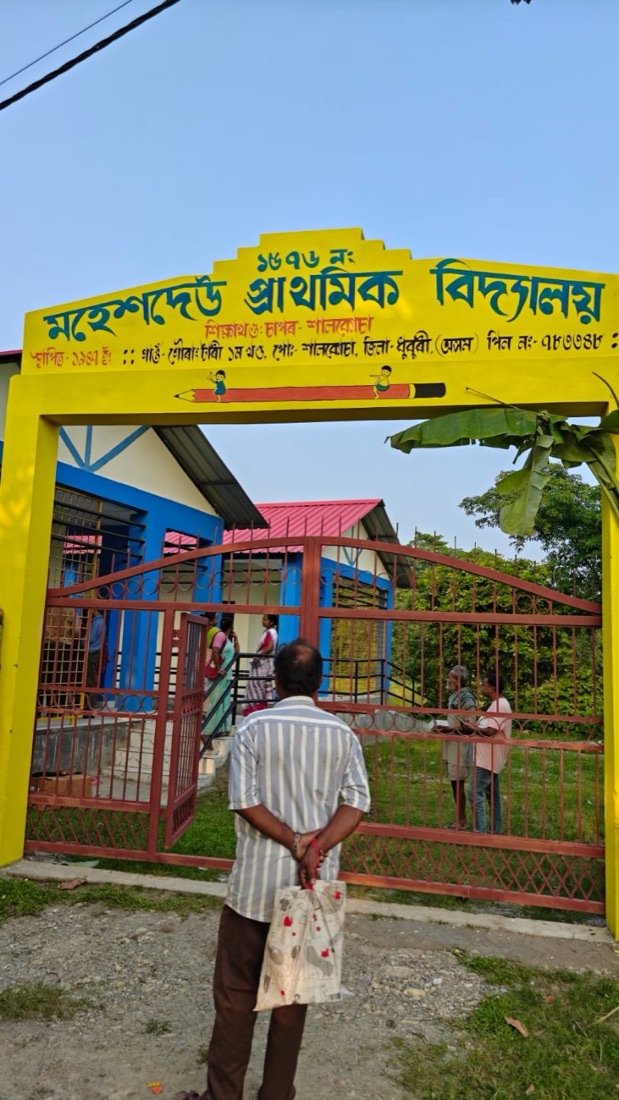
The hand-painted gate of a primary school in Dhubri district, Assam
Chapar, Dhubri The gate of a village primary school, one of the distribution points.

150 filters in two days, then the handover

In six riverine villages, where families draw water from muddy channels, we showed every household how to fit and use the filter, and handed out about 150 in two days. The foundation’s own field staff watched how simple it was, and now run the distribution themselves.

That handover is the part we are proudest of. It is how a programme grows without our team at every doorstep.

1,000 scholars took a filter home

With a family foundation’s rural scholarship programme, we tested sample units in coordinators’ homes first, then sent filters home with 1,000 students. Families rated it 4.3 out of 5 in the first survey.

10,565 filters for one programme

For one of India’s largest corporate foundations, we made and shipped 10,565 filters to ten sites, and trained local staff at each one to run the distribution.

A school, a hospital and the villages

A doctor joined our demonstration at the local hospital and recorded a short video with the team. Nearby, women who strain every pot through cloth were glad to stop.

With the armed forces

Field-demonstrated with the Indian Army in the Thar Desert, ordered by an infantry battalion, and trialled by the ITBP and the Indian Navy.

You know the communities. We’ll handle the water.

You know the villages and the people. We test the water, supply the filters at programme pricing, train your field staff, and give you the records your board will ask for.

  1. A water check first. We look at the water at your sites and tell you whether Jal Kavach fits, or whether you also need something for salts or arsenic.
  2. The right filter for each place. Tap filters for homes, schools and health centres. Bottle filters where water comes from hand pumps, wells or storage.
  3. Launch and training. Our team runs the first demonstrations and trains your field staff to carry on.
  4. Records you can report on. Distribution records, photographs and family feedback for your CSR and impact reports.

What it costs

For a programme of around 10,000 tap filters, Jal Kavach is ₹600 a filter plus 18% GST, with shipping charged at cost (about ₹15 a filter). Pilots and smaller programmes are priced by size. Most partners start with 10 sample filters, then a pilot in one district; our largest programme so far is 10,565 filters across ten sites. Ask for a quote for your numbers.

For CSR teams: making safe drinking water available is listed under Schedule VII of the Companies Act, and we can deliver in your operating districts. For government buyers and the armed forces: Jal Kavach is listed on the Government e-Marketplace (GeM), product ID 5116877-6200555098.

In the news

ThePrint, August 2026 “An MIT professor-led startup wants to solve India’s drinking water problem, with a tap filter” Read the article

Recognition

  • 2026Winner, Climate Pitch, a South Asia climate-solutions programme
  • 2025Winner, Eureka, IIT Bombay E-Cell
  • 2023Second place, MIT Water, Food & Agriculture Prize
  • 2023Special Social Impact Prize, TiE Boston University Student Pitch Competition
  • 2023Best Paper, Water Security & Climate Action Conference, out of 129 papers
  • 2023Harvard HealthLab Accelerator cohort

Ten years of research behind one glass of water

DetoXyFi began in Professor Rohit Karnik’s lab at MIT, where a team spent more than a decade looking for low-cost ways to make water safe to drink. The work was published in Nature Communications and field-tested with families in India, Uganda, Madagascar and the United States.

We brought that know-how home and built Jal Kavach for Indian water, Indian taps and Indian budgets. It is made in India. Our goal is the one painted on Jal Jeevan Mission boards across the country, har ghar jal, water in every home. We want that water to be safe to drink.

Prof. Rohit Karnik
Prof. Rohit KarnikCo-founder and CTO. Leads the science; Tata Professor of Mechanical Engineering at MIT.
Dhananjay Goel
Dhananjay GoelCo-founder and CEO. Runs the field programmes, and answers every email.

Meet the whole team

DetoXyFi demonstrating the filter to Indian Army officers in the field
Jaisalmer, Rajasthan Demonstrating Jal Kavach to Indian Army officers during a field visit.
A hand holding pieces of cotton-stalk biochar above a pile of it
Rajasthan Cotton-stalk biochar from our plant, October 2026.

Also from DetoXyFi

Biochar from what Rajasthan’s fields would burn

After the cotton harvest, the woody stalks left in the field are usually burned. Our sister company, DetoXyFi Biochar LLP, buys them from farmers, along with invasive kikar cleared from dry land, and turns both into biochar at its plant in Rajasthan.

The biochar goes into soil, where it holds water and stores carbon for the long term, and into steel and fuel as a cleaner carbon source. The same scientists who test Jal Kavach run its lab. The plant is designed for about 4,000 tonnes a year, with regular production from December 2026.

Visit DetoXyFi Biochar

Buy a Jal Kavach

For your own kitchen, or a bottle for the train. The tap filter is on Amazon and Blinkit; the bottle filter you can order from us directly.

Jal Kavach bottle filter, a compact red portable filter

Bottle Filter

34 grams. Screws onto a regular water or soft-drink bottle, for safe water on a trek, a train or a long day out.

Out of stock on Amazon right now. Order direct and we’ll ship it.

Questions we often get

Will it fit our taps?

The tap filter fits most standard Indian taps using the adjustable metal clamp and adaptor in the box. For programmes, we check the taps at your sites before rollout. For your own home, send a photo of your tap on WhatsApp (+91 73030 95923) and we’ll tell you.

What about places without taps?

The bottle filter works anywhere water can be poured into a bottle, including hand pumps, wells and stored water. We can help you choose the right mix for your sites.

How long does a filter last, and what does it cost a family?

One tap filter is rated for up to 7,500 litres, depending on how muddy the water is. For a family of five that usually means 6 to 12 months, so at ₹749 it comes to roughly ₹60 to ₹125 a month, or about 10 paise a litre. When the flow slows noticeably, it’s time to replace it.

Our water is very muddy. Will it still work?

Yes. In the Assam villages where we work, families filter water from muddy river channels with it, and our field video shows pond water coming out clear. Mud does make the flow slow down sooner. If you can, let a bucket stand for a while so the mud settles, then filter the clearer water from the top. The filter will last longer.

Does it remove TDS or heavy metals like an RO purifier?

No. Jal Kavach keeps natural minerals and does not remove dissolved salts, heavy metals such as arsenic and lead, or fluoride. It’s built to make germ-contaminated water safe, which is the most common problem in rural and low-income urban water. If a water test shows high TDS, arsenic, lead or fluoride, you need RO or a treatment made for that problem. Our guide to choosing a filter explains how to get your water tested.

What do families who use it say?

In our scholarship programme’s first survey, 101 households answered. On average they rated Jal Kavach 4.3 out of 5, and more than 86% said their water looked visibly clearer. Five households gave it 1 or 2 out of 5. A survey shows satisfaction, not health outcomes. For the filter itself, see the independent lab results.

How should it be looked after?

Flush it for 10 seconds before first use. Use cold or room-temperature water, never hot, and don’t let it freeze. Wipe the outside with a soft cloth.

Is there a warranty?

Yes, 6 months against manufacturing defects.

Which CSR activity does this count under?

Making safe drinking water available is listed in Schedule VII, item (i), of the Companies Act, alongside preventive health care and sanitation. Your CSR committee decides how to classify a project; we provide the records.

Can we buy through GeM, or with a GST invoice?

Both. Jal Kavach is listed on the Government e-Marketplace, product ID 5116877-6200555098. For direct orders we issue a GST invoice (18% GST) from DetoXyFi Technologies Pvt. Ltd., GSTIN 09AAJCD8722E1ZJ, and can fill in your vendor registration forms.

What do we get for our CSR or impact report?

Distribution records against each household, school or health centre, photographs from the distribution, and the results of a family feedback survey. For the filter itself, the Shriram Institute lab report.

Hi,

I’m Dhananjay. I run DetoXyFi with Rohit and a small team in India.

Most of our work happens far from this website. In school courtyards in Visakhapatnam. In river villages in Dhubri. At the local hospital in Kotma.

The filter is small, and the idea is simple: the tap a family already has should give water they can drink without worrying.

We don’t get everything right. Some water needs more than our filter can do, and when it does, we say so.

If you work with communities like these, write to me. I read every email myself.

Dhananjay

WhatsApp us